









EMS professionals understand that emergency response is only one part of the job. Behind every call is a complex workflow that attempts to balance patient care, operational readiness, staffing constraints, documentation requirements, and long‑term sustainability. The work does not pause when a patient is transferred or a unit returns to service.
Even so, assumptions about how EMS operates continue to influence funding decisions, technology adoption, policies, and performance expectations. These assumptions often oversimplify the work or rely on outdated models that no longer reflect today’s realities. Over time, those gaps between perception and reality create myths that impact agencies at every level, from the tools crews are given to the resources leaders are expected to do without.
The reality of EMS today is fast‑paced, resource‑constrained, and emotionally demanding. Patient care, incident reporting, compliance, and data-driven improvement all compete for limited time and energy in an environment that rarely slows down. In this blog, we break down common myths surrounding emergency medical services and explore what EMS actually looks like on the ground, based on the challenges agencies navigate every shift.
Myth #1: EMS crews sit around waiting for the next call
Reality: Most EMS crews are already on the move when the next call comes in.
In busy systems, EMS providers rarely return to the station between calls. It is common to go from one incident directly to the next for an entire shift. Crews may cover large areas because other ambulances are already tied up.
What this means for patient care:
Providers often arrive on scene after handling multiple calls earlier in the day and are still expected to deliver focused, compassionate care, even when fatigue is high.
Myth #2: EMS calls are mostly major emergencies
Reality: Many emergency services calls are repeated, non-critical, sometimes trivial cases.
While EMS professionals train for life‑threatening emergencies, initial patient acuity data reveals that the majority of calls are low acuity (18%) or emergent (54%), with only 3% classified as critical. Non-critical calls may involve minor injuries, lift assists, frequent callers, or patients dealing with isolation and limited access to care.
Why this matters:
Switching between high-acuity emergencies and routine calls takes emotional discipline. Providers must deliver the same level of professionalism and care to every patient, regardless of call type.
Myth #3: Staffing shortages mainly affect EMS scheduling
Reality: Staffing shortages directly increase burnout and risk.
When agencies are short staffed, EMS providers take on extra calls, work more overtime, and get fewer recovery periods between shifts. This compounds fatigue and stress over time.
Impact on emergency services operations:
- Longer shifts with less downtime
- Increased documentation after hours
- Higher turnover and loss of experienced staff
Staffing challenges are not just an HR issue. They influence response coverage, morale, and long-term system stability.
Myth #4: EMS providers are primarily ambulance drivers
Reality: EMS providers are healthcare professionals delivering medical care long before a patient reaches the hospital.
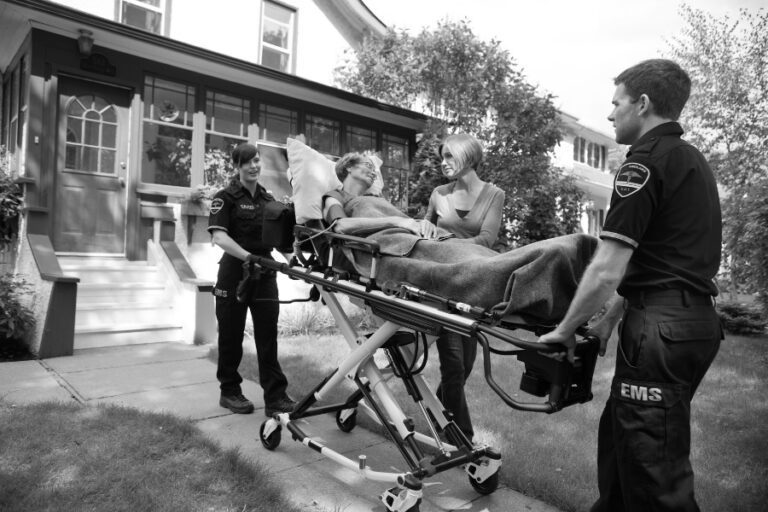
EMS teams assess patients, start IVs, administer medications, manage airways, and stabilize critical conditions in the field. Care often begins on scene, not in the emergency department.
In many cases, EMS can also provide treatment in place, assessing and treating patients with low‑acuity conditions on scene without transporting them to the ED. This helps reduce unnecessary hospital visits while ensuring patients still receive appropriate, timely care.
Key takeaway:
EMS plays a direct role in treating patients and saving lives, whether that care happens on scene, during transport, or without transport at all.
Myth #5: EMS is well funded because it is part of public safety
Reality: Many EMS systems operate on limited budgets and are not funded like other public safety services. In some states, EMS is not even legally designated as a public safety service or guaranteed funding source.
EMS agencies often rely on a patchwork of reimbursement, local support, or grants, which creates instability. These constraints limit investment in staffing, training, wellness programs, and modern technology.
Why funding matters:
Underfunded EMS systems struggle to support provider wellness, sustainable staffing models, and efficient, modern software solutions. Over time, these gaps directly contribute to burnout, turnover, and compromised system resilience.
Myth #6: EMS documentation happens in real time
Reality: Providers must find time for reporting after patient care is complete.
EMS providers focus on treatment first. Documentation often happens later, sometimes hours after the call, usually based on memory, handwritten notes, or monitor data.
Challenges with data reporting:
- High call volume leaves little documentation time
- Complex interfaces slow reporting
- Repetitive clicks reduce accuracy and compliance
Good documentation is essential, but it must fit into real-world workflows.
Myth #7: Crews resist technology because they do not like change
Reality: EMS crews resist technology that doesn’t actually help them or improve their day-to-day operations.
Adoption improves when providers understand why data is collected and how it benefits them. When data leads to better staffing, safer workloads, clearer inventory tracking, or improved patient outcomes, buy-in follows.
What actually supports adoption:
- Faster documentation workflows
- Clear visibility into performance data
- Tools that reduce, not add, administrative burden
How Better Software Supports the Realities of EMS
The biggest myth of all is that things have to be this way. The right tools support the day-to-day realities of how care is delivered in the field, not based on outdated assumptions about transport‑only models.
Agencies need solutions that help them:
- Reduce documentation time with workflows designed for real EMS encounters
- Improve data accuracy and reporting confidence
- Track supplies and medications with integrated inventory management
- Use data to support staffing, funding, and operational decisions
Tools like ImageTrend Elite for EMS can streamline documentation while capturing the clinical detail agencies need, while AI Assist helps reduce report-writing burden by supporting faster, more consistent documentation, allowing providers to spend less time charting and more time focused on patient care. Carelytics turns EMS data into actionable insights that help leaders better understand demand, performance, and system needs.
When software aligns with how EMS actually operates, providers spend less time navigating systems and more time caring for patients. Understanding the realities of EMS leads to better expectations, better technology, and stronger support for the professionals delivering care every day.
Frequently Asked Questions About EMS
Why is EMS burnout so common?
High call volume, staffing shortages, and constant exposure to stress all take a cumulative toll on EMS professionals. Limited recovery time between shifts and the emotional weight of patient care makes burnout difficult to avoid.
Why does EMS documentation take so long?
Incident reporting requires detailed, defensible records that must support patient care, compliance, and agency accountability. When workflows are fragmented or documentation is completed after the fact, the time burden increases significantly.
How do EMS reporting solutions help agencies?
Accurate data helps agencies understand demand, staffing needs, and performance trends. It also supports funding requests, quality improvement efforts, and more informed patient care decisions.
Is EMS mostly emergency response or healthcare?
EMS is healthcare delivered in unpredictable, high-stakes environments. Many patient interactions happen long before a hospital is involved and often go far beyond traditional emergency response.
Click here to find out how ImageTrend supports the realities of EMS work with solutions built for the unique challenges crews face every day.