









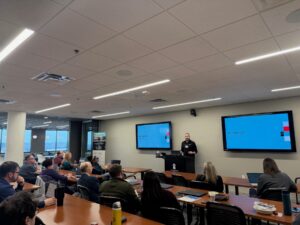
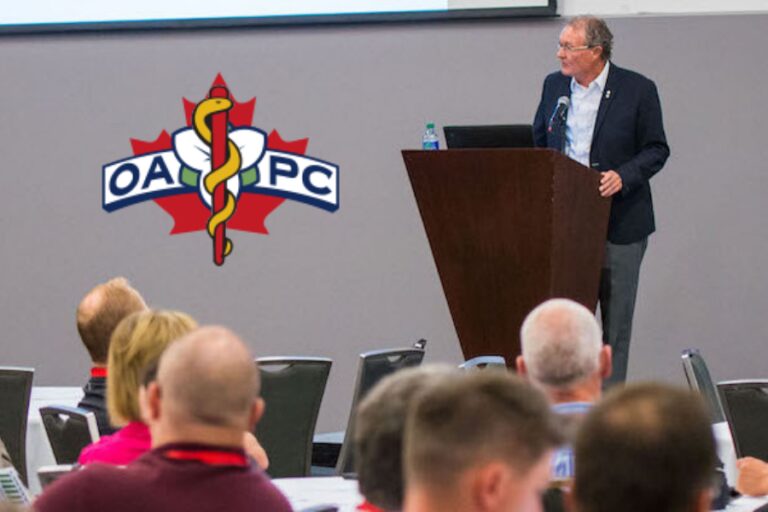
The 2026 OAPC Spring Education Symposium brought together paramedic leaders from across Ontario to focus on a shared goal: strengthening the future of paramedicine through evidence-based decision-making and practical innovation.
Held May 5–7 at the Toronto Airport Marriott, this impactful event created space for meaningful conversations around leadership priorities, operational challenges, and where the profession is headed next.
As the voice of paramedic leadership in Ontario, OAPC continues to champion a culture of change grounded in best practices and data. This year’s discussions reinforced just how important that foundation is for the next phase of growth across EMS.
A Clear Focus on Efficiency and Workforce Impact
One of the strongest themes throughout the event was time; specifically, how to give more of it back to paramedics. Documentation, reporting, and administrative requirements continue to place pressure on crews, but the opportunity to reduce that burden is becoming more tangible through better workflows and smarter use of data.
For a typical Ontario paramedic service, even incremental improvements can scale quickly. Based on current estimates, reducing documentation time by as little as 30 minutes per incident could return the equivalent of 19,000 hours annually, or more than 790 full days of workforce time.
That kind of impact goes beyond efficiency. It means more time available for patient care, less fatigue for crews, and stronger overall system readiness.
Moving from Retrospective Reporting to Real-Time Insight
Another key takeaway was the shift in how EMS data is being used. Traditionally, reporting has been retrospective. But paramedic data represents one of the earliest signals of demand within the healthcare system. When that data is accessible and timely, it can inform decisions well beyond EMS.
Discussions at the symposium highlighted the growing focus on:
- Understanding transport patterns and system demand
- Identifying where capacity may be strained
- Supporting proactive planning instead of reactive response
This shift from “looking back” to “acting in the moment” is becoming increasingly important for both paramedic services and healthcare partners.
Aligning with Evolving Ontario Requirements
Regulatory alignment was also front and center, particularly around Ministry of Health reporting. New expectations around incident reporting and data submission are pushing agencies to streamline processes while maintaining compliance and transparency.
In response, agencies are looking for ways to simplify reporting while still meeting increasingly defined standards. That starts with capabilities like standardized reporting outputs, reduced duplicate documentation, and support for multiple report types, including paramedic, service, and hospital reports. Efforts to improve reporting consistency and align with provincial standards are already underway across Ontario services, particularly in how agencies are approaching Canadian EMS documentation practices and evolving data standards.
ImageTrend has been working closely with Ontario services to support this shift, including delivering an updated, province-aligned dataset designed to help agencies meet new documentation and submission requirements without disrupting workflows.
The overall message was clear: systems need to keep pace with policy changes without adding complexity for frontline staff.
Supporting Clinical and Operational Growth
The conversations at OAPC also reflected the growing scope of paramedicine. From community care initiatives to specialty programs like palliative care and patient screening, services are being asked to support a broader range of needs than ever before.
The continued growth of community-based models of care is a big part of that shift, with paramedic services playing a larger role outside of traditional emergency response. You can see this reflected across Ontario and beyond in community paramedicine programs.
This broader scope requires more flexible documentation, better visibility into clinical and operational data, and tools that support both frontline and leadership decision-making. As paramedicine continues to evolve, so does the need for systems that can adapt alongside it.
Turning Insight into Action
If there was one consistent theme across the symposium, it was that data alone isn’t enough. The value comes from how quickly and effectively it can be turned into action.
Whether it’s improving documentation workflows, strengthening reporting processes, or gaining clearer visibility into system performance, the focus is on enabling real, measurable outcomes.
At ImageTrend, that starts by listening: to Ontario services, to leadership priorities, and to the realities crews face every day. From there, it’s about building tools that reduce friction, support compliance, and help agencies move forward with confidence.
Continuing the Conversation
The OAPC Spring Education Symposium reinforced the importance of collaboration across the paramedic community. The challenges are complex, but so are the opportunities. By continuing to share insights, align on priorities, and invest in practical innovation, Ontario services are well positioned to lead the next phase of paramedicine.
If you attended the symposium, thank you for the conversations and perspectives you shared. If you weren’t able to join, we’d welcome the chance to connect and continue the discussion.