









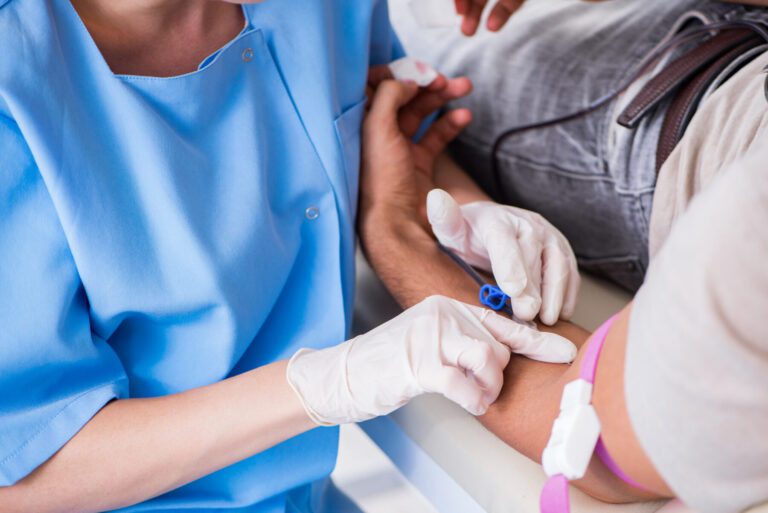
Prehospital blood administration is gaining momentum across the country.
More agencies are adopting whole blood programs; protocols are evolving and ground-based blood administration is becoming more common. According to ImageTrend’s 2026 EMS Insights Report, the proportion of prehospital blood transfusions delivered by ground units doubled from 5% to 10% between 2023 and 2025. Additionally, nearly 3,800 blood administrations were documented in 2025, with approximately 80% occurring in trauma-related incidents.
Yet one of the most important questions remains surprisingly difficult to answer: Did the patient survive because of it?
Today, only about 3% of EMS records nationally include linked hospital outcome data. That means the vast majority of prehospital interventions, including blood administration, are documented without visibility into what happened after the patient arrived at the hospital.
As whole blood programs continue to expand, that gap becomes increasingly difficult to ignore.
Prehospital Blood Use Is Growing Across EMS
The growing adoption of prehospital blood administration reflects a broader shift in trauma care. What was once primarily limited to air medical programs, is increasingly being implemented by ground EMS agencies as well.
The benefits of early blood administration are driving this momentum. Research continues to demonstrate the importance of timely intervention for patients experiencing hemorrhagic shock, and EMS agencies across the country are exploring ways to improve access to blood products in the field.
As these programs mature, however, the conversation is beginning to evolve. The question is no longer simply: “Can we administer blood in the field?”
It’s becoming: “How do we know it’s making a difference?” For some agencies, that’s a much harder question to answer.
Why Blood Administration Data Alone Isn’t Enough
Today, most EMS systems can capture critical information about blood administration, including:
- When blood was administered
- The type of incident
- Patient condition at the time of treatment
- Vital signs and shock indicators
- Medications and procedures performed
This information is essential for understanding adoption trends, operational requirements, and protocol compliance. But it only tells part of the story.
What’s often missing is visibility into outcomes:
- Did early blood administration improve survivability?
- How did the patient fare once they reached the hospital?
- Were there differences across patient populations?
- Which protocols produced the best results?
- How do outcomes compare when blood is administered versus when it is not?
Without this connection, it’s difficult to fully understand the impact of these interventions. Documentation helps us understand what happened, and outcome data helps us understand whether it mattered.
The Missing Link: Hospital Outcomes
As prehospital blood programs expand, agencies, researchers, healthcare leaders, and policymakers are increasingly being asked to justify:
- Clinical effectiveness
- Operational complexity
- Program expansion
- Funding decisions
- Resource investment
Usage data alone isn’t enough to answer those questions. Outcome data is what turns activity into evidence. It allows agencies to move from “We’re doing this” to “We know this is working—and here’s why.” That distinction becomes increasingly important as more agencies invest in blood programs and seek to demonstrate measurable value.
Why EMS-Hospital Data Exchange Matters
One of the biggest barriers to understanding blood outcomes isn’t clinical, it’s technical. EMS data and hospital data often exist in separate systems, making it difficult to connect prehospital interventions with downstream outcomes. Without a reliable method for exchanging information between EMS and hospitals, agencies may never know:
- Whether a patient survived
- What diagnosis was ultimately assigned
- How treatment decisions influenced outcomes
- Whether field interventions aligned with hospital findings
This is why bidirectional EMS-hospital data exchange has become increasingly important. Solutions like ImageTrend’s Health Information Hub™ (HIH) help connect prehospital records, patient outcomes, billing information, and hospital data into a more complete episode of care. By sharing information between EMS and hospitals, agencies gain visibility into how prehospital care impacts patient outcomes while reducing manual follow-up and data collection efforts.
More importantly, it helps close the learning loop. Instead of care ending at patient handoff, EMS agencies can better understand what happened next—and use those insights to improve future patient care.
What Outcome Data Could Unlock for EMS Research and Patient Care
Today, EMS agencies can measure blood administration rates, track patient presentations, and evaluate operational performance. What remains difficult is measuring clinical impact at scale. Outcome data has the potential to help answer critical questions such as:
- Which patient populations benefit most from blood administration?
- Which trauma mechanisms respond best?
- How do outcomes differ between urban and rural settings?
- Are current protocols identifying the right patients?
- What interventions should be prioritized in future training and protocol development?
These are the types of questions that shape the future of patient care and represent the next frontier for EMS research. The ability to connect prehospital interventions with hospital outcomes creates opportunities to evaluate care longitudinally, from initial patient presentation through diagnosis, treatment, and discharge.
Even without knowing outcomes, agencies can track activity. But with outcomes, they can do something more powerful: generate evidence.
Better Data is Becoming a Strategic Priority
As whole blood programs mature, agencies are placing greater emphasis on documentation consistency, inventory visibility, reporting, and quality improvement.
Accurate tracking is important for:
- Protocol compliance
- Program evaluation
- Research participation
- Funding justification
- Expansion planning
This is one reason why blood tracking and documentation have become increasingly important topics across EMS.
However, documentation alone isn’t the finish line. The ultimate goal isn’t simply knowing that blood was administered. It’s understanding whether those interventions improved patient outcomes and using that information to guide future decisions.
The Future of Whole Blood Programs Depends on More Than Documentation
Whole blood is one of the most significant clinical advancements in modern prehospital care. The industry has made tremendous progress in expanding access, improving documentation, and standardizing protocols. The next challenge is proving impact.
As EMS leaders, researchers, hospitals, and policymakers continue investing in whole blood programs, outcome data will become increasingly important for answering the questions that matter most:
- Are patients surviving at higher rates?
- Which protocols produce the strongest outcomes?
- Where should future investments be made?
- How can agencies continue improving care?
Capturing what happened is no longer enough. Understanding what happened next is what will define the future of prehospital blood administration.
Talk with an ImageTrend expert to learn how connected EMS and hospital data can support whole blood initiatives, performance improvement efforts, and future research.