




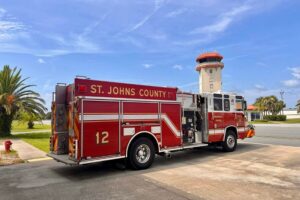

One-third of ImageTrenders bring firsthand experience from the communities we serve.
When a fire chief, EMS director, clinical leader, or hospital liaison sits down for a software demo, they’re usually trying to solve familiar challenges:
- How do we reduce documentation burdens without sacrificing quality?
- How do we turn data into something useful?
- How do we improve operations with limited time and resources?
For ImageTrend’s Sales Engineering team, these aren’t hypothetical conversations. ImageTrend’s Sales Engineering team helps agencies connect their operational and clinical needs to the right technology. By combining product expertise with firsthand fire, EMS and healthcare experience, the team can ask informed questions, understand complex workflows and help customers evaluate practical solutions for their organizations.
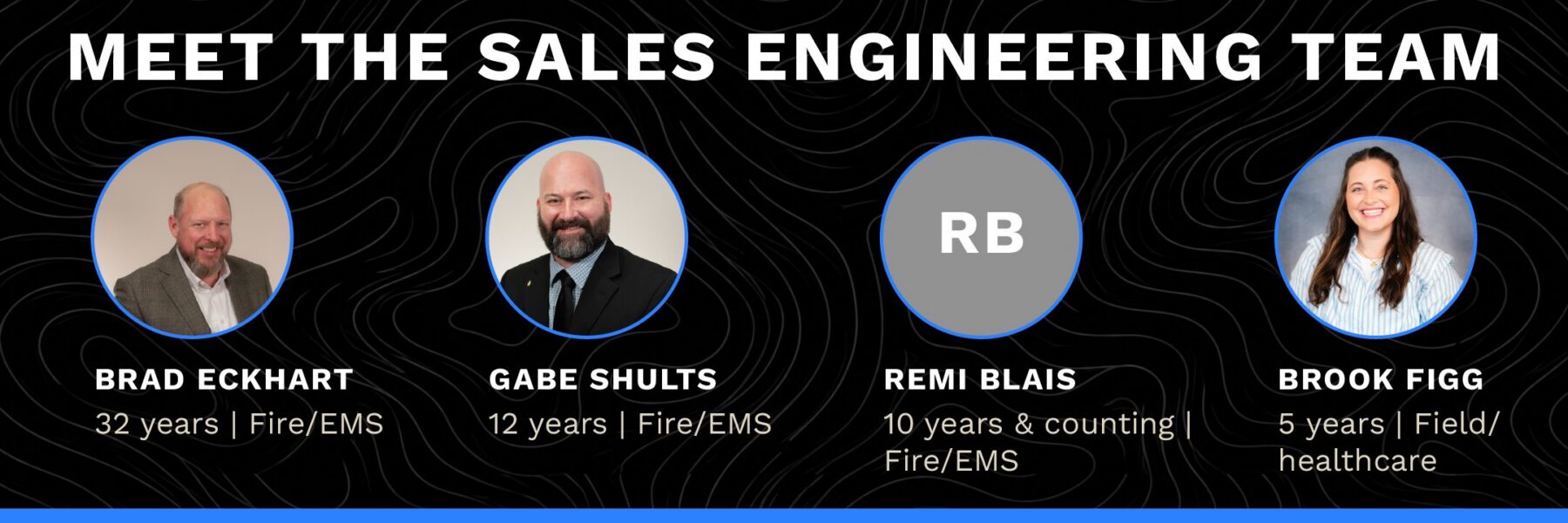
The team brings more than 186 years of combined fire and EMS experience to customer discussions, with backgrounds that include firefighter, paramedic, flight medic, lieutenant, captain, battalion chief, deputy chief, EMS chief, fire chief, hospital liaison, and more. As Nathaniel Meisner explains, “We have a diverse team of industry experts that have been in the shoes of the customer.”
“It matters because we understand the challenges that the customer is facing,” says Nathaniel Meisner. “That deep understanding allows for a consultative approach and a partnership that brings mutual respect.”
Seeing the Whole Picture

Over 31 years in Virginia Beach Fire/EMS, Tom Green served as a firefighter, paramedic, lieutenant, captain, battalion chief, division chief and deputy chief. Those experiences shape the conversations he has with agencies today.
One challenge stands out from his time as a paramedic: “The biggest challenge came in my role as a Paramedic where my agencies were basically flying blind with respect to clinical measures, treatment and outcomes.” His agencies processed thousands of patient care and co-response records, making it difficult to consistently measure performance and identify opportunities for improvement.
That experience proved valuable with a customer facing similar challenges: “The client had difficulty processing and analyzing data that was being collected across multiple agencies.” Having managed a multi-agency environment himself, Tom could personally relate to the problem and show how a unified solution could improve oversight and visibility, building a productive conversation on shared understanding.
An ImageTrend user since about 2008, Tom came to rely on its data for clinical and operational decisions. When ImageTrend reached out after his retirement in 2021, he saw a natural next step: helping other agencies solve familiar problems with a platform he believed in.
One lesson from his career continues to guide his work: “Always meet someone where they are at. Understand their operations, processes, and needs first and foremost.”
Reducing the Documentation Burden
Before joining ImageTrend, John Hamilton worked with a documentation platform that had not been updated in more than a decade. “It was not able to be used in the field, which meant we had to spend hours after the call on documentation alone,” John explains.
The impact wasn’t limited to operations. “We often had OT hours spent after shift finishing reports which took me away from family and friends.”
With a background as a paramedic and Clinical Chief, John still serves as a flight paramedic today. “As a previous buyer myself, I often have conversations that bring me back to sitting in our customer’s seat.”
That experience recently helped inform discussions with Utah AirMed. Their crews were required to complete duplicate documentation for certain patient encounters, creating additional workload for already busy clinicians. John was able to help explore a workflow that reduced that burden and streamlined the process.
Practical Solutions for Real-World Challenges
As a leader in a combination fire department, Troy Lachinski regularly sees the challenges departments face when balancing reporting requirements, training, compliance, and day-to-day operations with limited staff and resources.
That background has shaped how he approaches technology conversations. As he puts it, “Technology must be simple and efficient for end users while still capturing accurate, consistent data.”
One example involved agencies that struggled to dedicate staff time to reporting and analysis. Troy worked with those organizations to create dashboards and reports that delivered needed information to stakeholders while reducing administrative effort.
In many cases, those reporting improvements became opportunities to improve transparency, support leadership decisions, and better communicate outcomes to boards, councils, and community stakeholders.
Customers often appreciate the familiarity that comes from speaking with someone who understands their environment firsthand. According to Troy, “That shared experience allows me to relate to their day-to-day realities and quickly identify practical solutions.”
Helping Organizations Use Data More Effectively
Throughout a career that has included service as a firefighter, paramedic, EMS captain, deputy chief, fire chief, and healthcare leader, Jeff Comeau has seen the role data plays in operational and strategic decisions. “Actionable data is needed to tell a story, build a strategy, and drive change in the system,” he says.
Jeff has used that experience to help healthcare organizations better understand EMS flow patterns and make informed decisions about outreach, growth, and community engagement. His experience as both a healthcare leader and Market Intelligence user allows him to connect data to real-world objectives and organizational goals.
Whether discussing trauma patterns, stroke volumes, or EMS referral activity, the conversation extends beyond what the data shows and into how organizations can use that information to guide decisions.
A System Built on Trust
Ask Nathaniel Meisner what customers value most about working with the Sales Engineering team beyond product expertise, and his answer is immediate: “Trust.”
Across the team are current and former firefighters, paramedics, chiefs, flight medics, hospital liaisons, and EMS leaders. They’ve managed budgets, led departments, navigated compliance requirements, completed patient care reports, and worked through the same operational challenges many customers face today.
As Nathaniel explains, “We have all had the terrible calls that change your life and know the stress of serving in fire/EMS. That shared experience unites the team.”
For agencies evaluating new technology, those experiences help create more productive conversations from the start. Questions are understood more quickly. Challenges require less explanation. Discussions can focus on finding the right path forward.
The software is an important part of the conversation. So is the experience behind it.
Schedule a demo to connect with an ImageTrend Sales Engineer who can walk you through the technology, answer your technical questions, and show how our solutions can support your agency’s real-world workflows.