
A Reference Guide for Every Type of Fire Inspection Checklist
Fire departments and Fire Marshals conduct inspections across dozens of building types and systems. Each fire safety inspection category has its own codes, schedules, documentation requirements, and checklists.
While some inspections are conducted directly by fire departments, others are completed by third-party vendors or building owners. Fire agencies are often responsible for tracking, verifying, and documenting compliance across all inspection types.
The platform’s permits and inspections solution provides the tools you need to manage inspection programs across all inspection types. You can track when inspections are due, document findings in the field, and maintain compliant records that match your jurisdiction’s requirements, whether inspections are completed internally or by third parties.
Every inspection type comes with its own requirements, schedules, and documentation needs. The sections below provide a quick reference for common fire inspection categories while highlighting how agencies use ImageTrend to streamline inspection management, compliance tracking, and reporting. With ImageTrend Elite’s Library, agencies can also leverage proven content shared by other organizations rather than building everything from scratch.
With this guide, you’ll better understand common questions like:
- How often is a fire inspection required?
- What is included in a fire inspection?
- What is the fire inspection process like?
Fire Alarm Inspection Checklists and Requirements
Fire alarm systems require regular inspection to meet NFPA 72 standards. Inspections verify that detection devices, notification appliances, and control panels function correctly.
Typical inspection items:
- Smoke and heat detectors
- Pull stations
- Audible and visual notification devices
- Control panel operation
- Battery backup systems
- Annunciator panels
Most jurisdictions require annual inspections, with some components tested quarterly or semi-annually. Inspection results are documented, including device conditions, test results, and any deficiencies requiring correction.
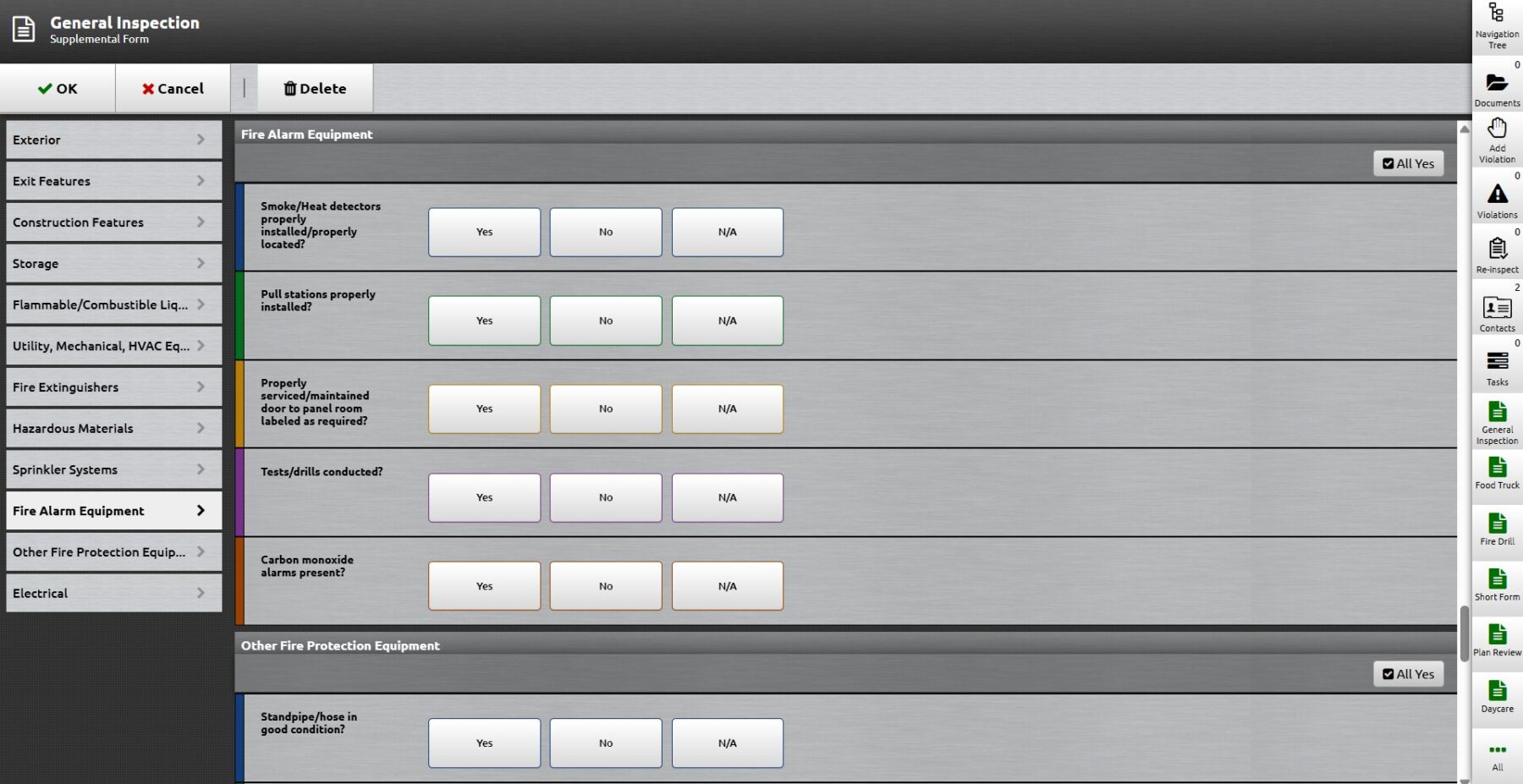
Explore our fire alarm inspection software
Access fire alarm inspection checklists, fire alarm inspection report software, and fire alarm inspection templates.
View fire alarm inspection solutions
Fire Inspection Software
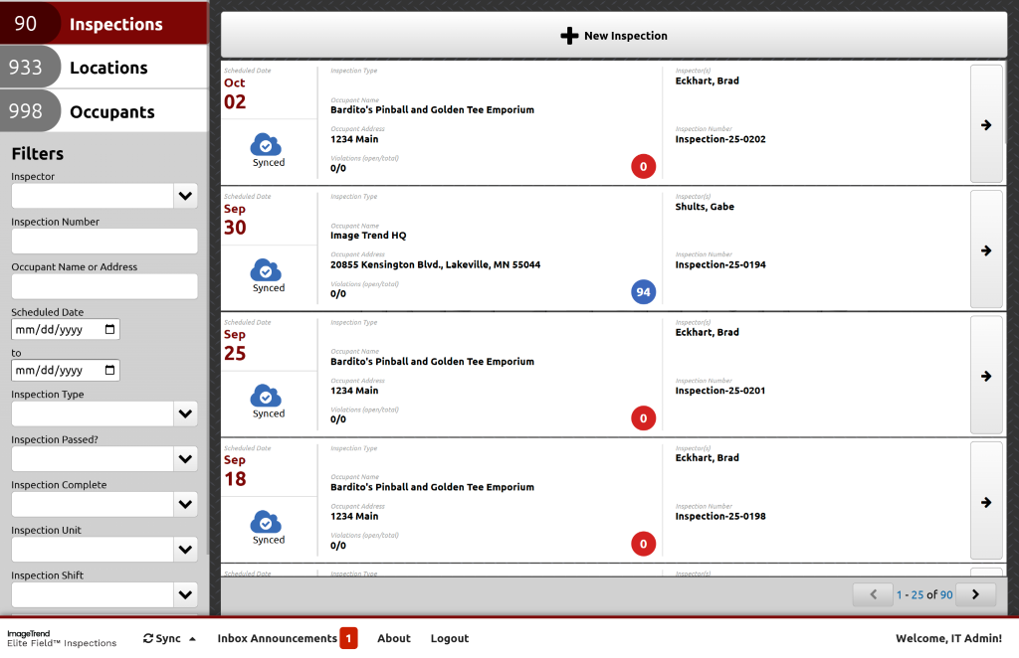
Managing fire inspections involves more than completing checklists. Agencies need a centralized way to schedule inspections, document findings, track compliance, and maintain records across hundreds or even thousands of locations. Fire inspection software helps streamline these processes while reducing manual tracking and administrative work.
Key capabilities include:
- Inspection scheduling and tracking to help ensure required inspections are completed on time.
- Location and occupancy management for maintaining inspection records across multiple properties.
- Violation tracking and follow-up to monitor deficiencies and corrective actions.
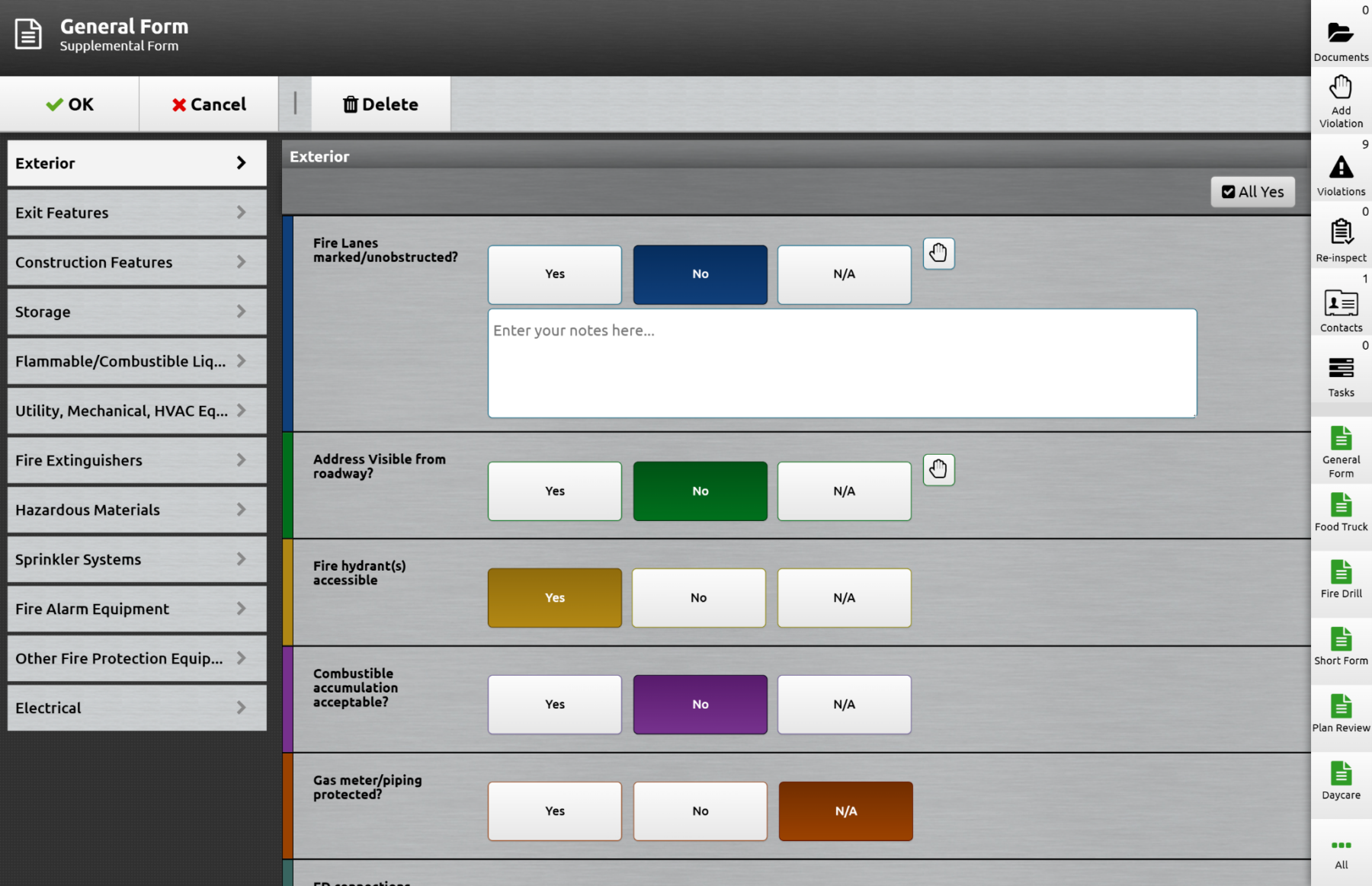
- Field documentation tools that allow inspectors to capture findings and complete reports from the field.
- Filtering and reporting capabilities that make it easier to find inspections, identify trends, and demonstrate compliance.
Explore fire inspection software solutions
Fire Door Inspection Checklists, Requirements and Common Violations
Fire doors prevent the spread of fire and smoke between compartments, but how often do fire doors need to be inspected, and who can inspect them?
NFPA 80 requires annual inspections of all fire door assemblies.
What inspectors check:
- Door and frame condition
- Gaps between door, frame, and floor
- Self-closing and latching mechanisms
- Signage and labels
- Hardware operation
- Glazing and vision panels
Deficiencies are common. Damaged seals, missing labels, and blocked doors account for most violations. Fire agencies need to track which doors have been inspected, document findings, and schedule re-inspections for corrected violations.
Get Fire Door Inspection Software
Find checklists, report templates, and software you need to document fire door inspections and track compliance schedules.
View fire door inspection solutions
What to Check During Fire Damper Inspections
Fire dampers close automatically when heat activates a fusible link, preventing fire and smoke from spreading through ductwork. NFPA 80 requires inspection one year after installation, then every four years (or six years for hospitals). Fire damper inspection checklists help you track these intervals and document inspection findings for every damper in your system. These inspections are often completed by specialized contractors, making centralized tracking and documentation critical for fire departments.
Fire Damper Inspection focus areas:
- Fusible link integrity
- Blade movement and closure
- Mounting and frame condition
- Access panel locations
- Smoke damper operation (if combination damper)
Damper inspections often require coordination with HVAC contractors and building maintenance teams. Tracking damper locations and inspection history across multiple buildings creates significant administrative work.
Fire Extinguisher Inspection Checklists and Requirements
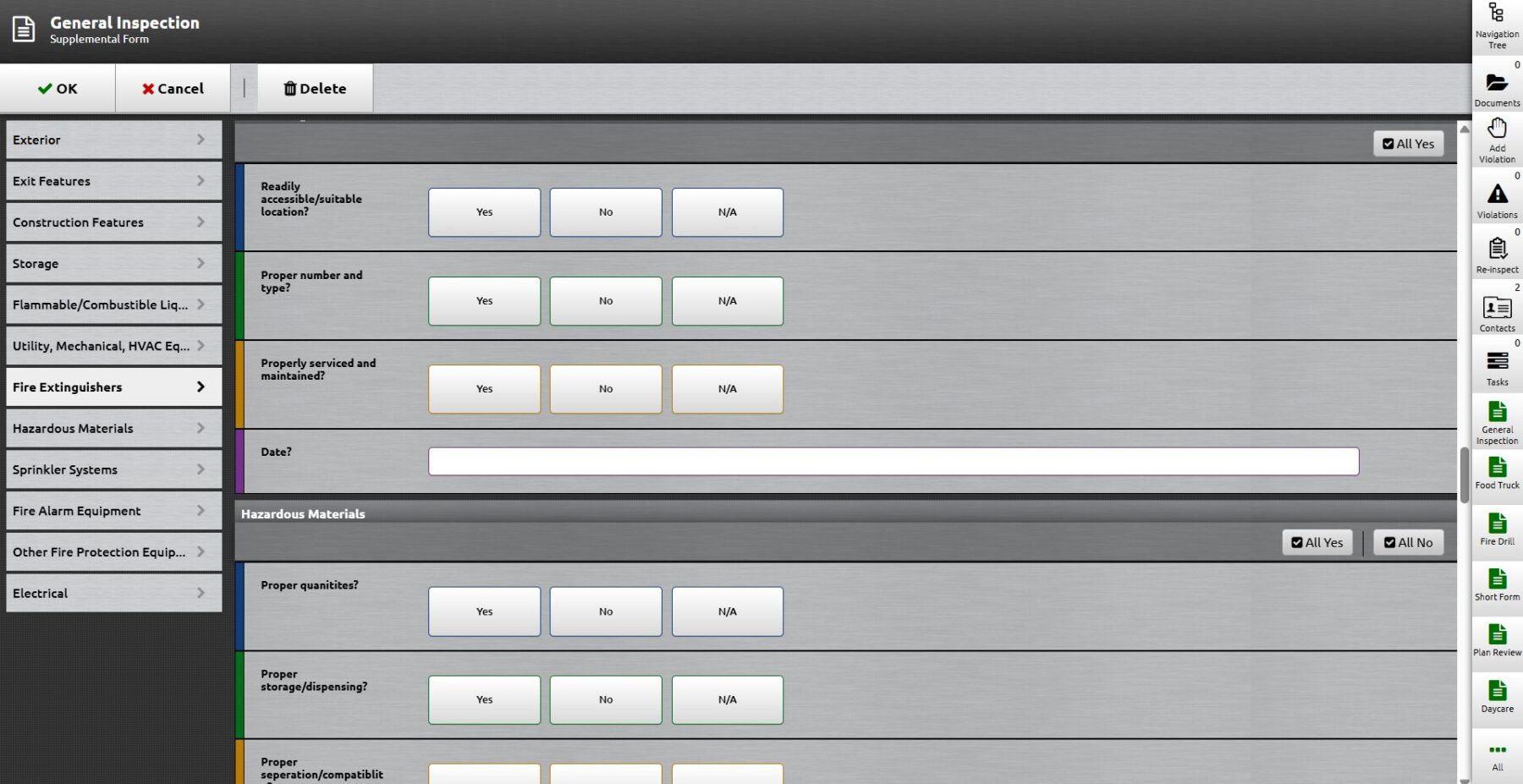
Portable fire extinguishers need monthly visual inspections and annual maintenance per NFPA 10, with hydrostatic testing on longer cycles based on extinguisher type. Fire extinguisher inspection checklists guide you through these requirements and answer the practical questions that come up in the field:
- How often do fire extinguishers need to be inspected?
- How to inspect a fire extinguisher
- Where to get fire extinguishers inspected
- Who can inspect fire extinguishers
Monthly visual checks include:
- Extinguisher location and accessibility
- Pressure gauge readings
- Physical condition (dents, corrosion, leaks)
- Safety pin and tamper seal
- Operating instructions legibility
Learn more about fire inspection solutions
Annual maintenance requires a more thorough examination by a trained professional. Inspectors verify that locations have the correct extinguisher types and that units are accessible and properly mounted.
What Fire Sprinkler Inspections Cover
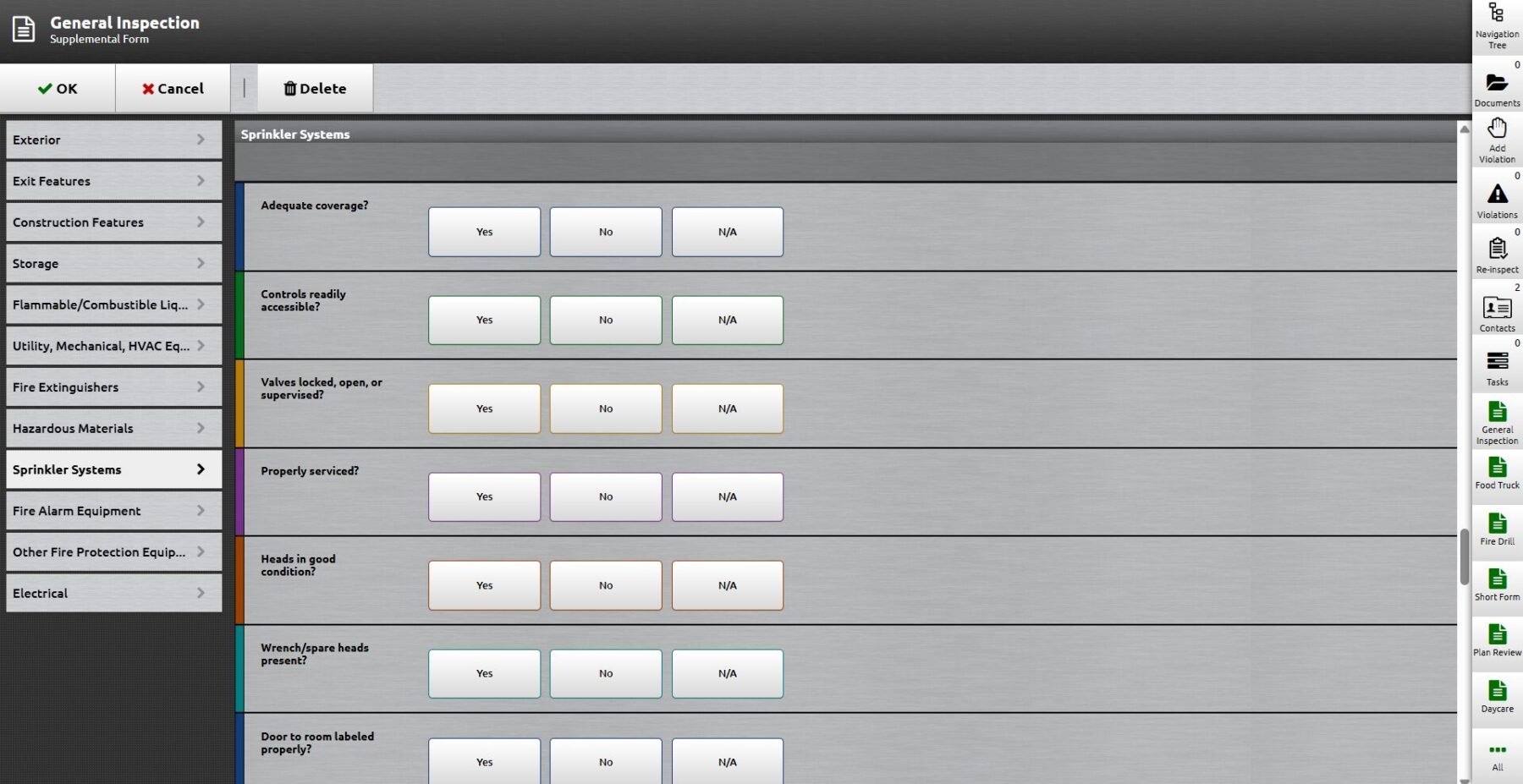
Automatic sprinkler systems require inspections at multiple intervals under NFPA 25. Quarterly, annual, and five-year inspections each cover different components.
Common inspection points:
- Sprinkler heads (condition, orientation, obstruction)
- Control valves
- Gauges and water flow alarms
- Pipe condition and hangers
- Main drain tests
- Fire department connections
Obstructions near sprinkler heads and painted-over sprinklers are frequent findings. Inspection results must be documented and tracked to ensure all required tests have been completed.
Fire Pump Inspection Checklists and Testing Requirements
Fire pumps supply water pressure for sprinkler systems in larger buildings. NFPA 25 requires weekly, monthly, and annual testing and inspection.
Inspection and testing items:
- Weekly churn (no-flow) tests
- Monthly tests under flow conditions
- Annual flow tests at 150% of rated capacity
- Pump room condition
- Controller operation
- Jockey pump function
- Alarm supervision
Pump failures often trace back to deferred maintenance or controller issues. Consistent documentation of test results helps identify problems before they become critical.
Managing Inspections Across Multiple Locations
Fire departments and Fire Marshals track hundreds or thousands of locations, each with its own inspection schedule, history, and violation status—often across a mix of internally completed inspections and third-party reports. Centralizing this information gives agencies visibility into compliance gaps, overdue inspections, and outstanding violations, regardless of who performed the inspection.
Managing this across spreadsheets or paper records makes it difficult to stay current, generate reports for leadership, and demonstrate compliance during audits.
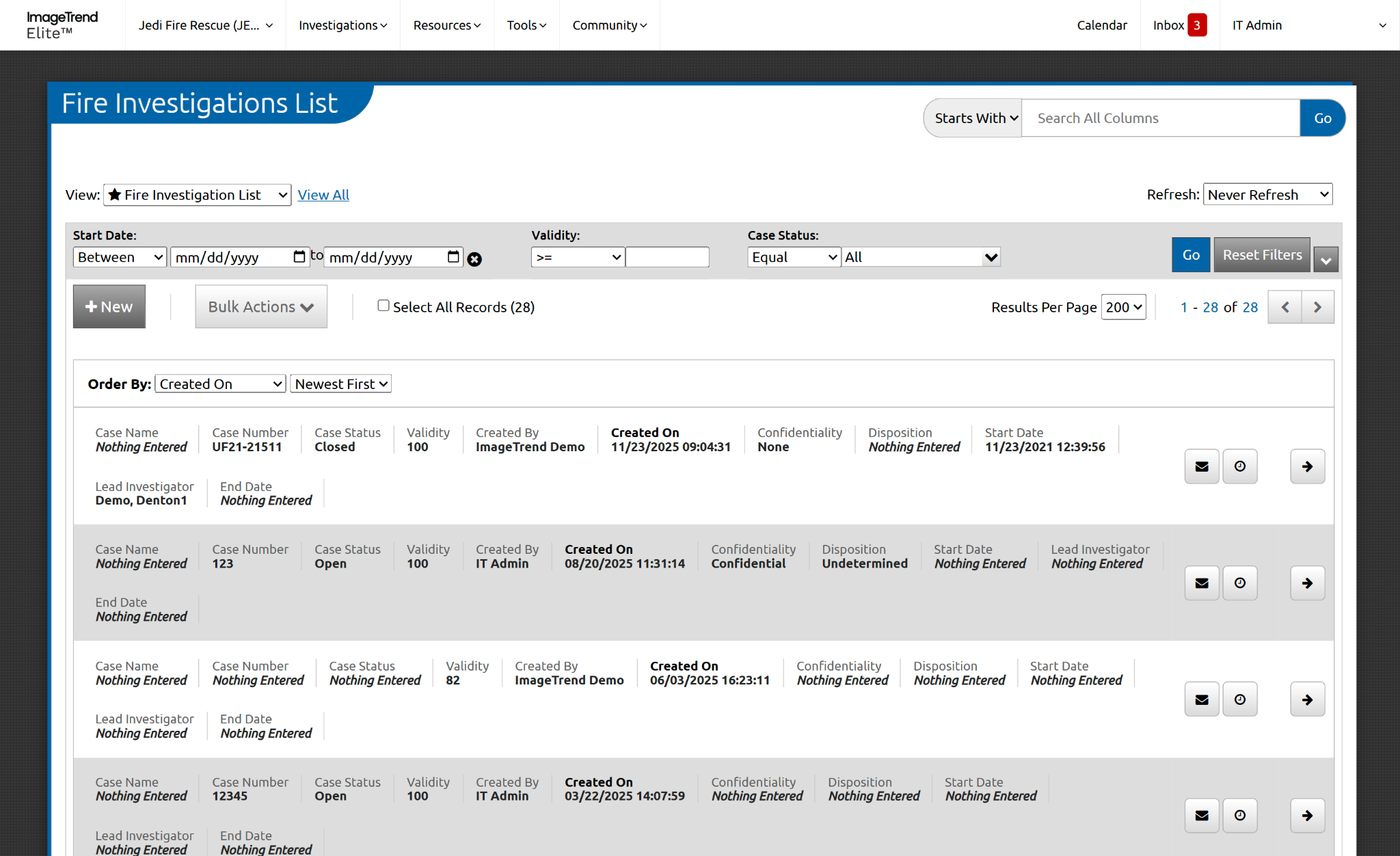
Explore Fire Inspection Software >
Build Custom Fire Inspection Checklists with ImageTrend
No two jurisdictions have exactly the same inspection requirements. Fire departments often need to tailor inspection forms to local ordinances, documentation standards, and workflows. ImageTrend’s configurable inspection tools allow agencies to create and customize inspection forms without requiring custom software development.
A typical process includes:
- Start with your inspection requirements by identifying the information inspectors need to capture in the field.
- Build or modify inspection forms to match your agency’s workflows and documentation standards.
- Add inspection questions and sections for items such as fire alarms, extinguishers, sprinklers, doors, or other inspection categories relevant to your jurisdiction.
- Configure response options and required fields to help ensure consistent data collection.
- Test and refine the form before deploying it to inspectors in the field.
- Update forms over time as regulations, policies, or operational needs change.
In addition to configurable inspection forms, agencies can leverage ImageTrend Elite’s Library to access and reuse proven content shared by other organizations, helping reduce setup time and avoid starting from scratch