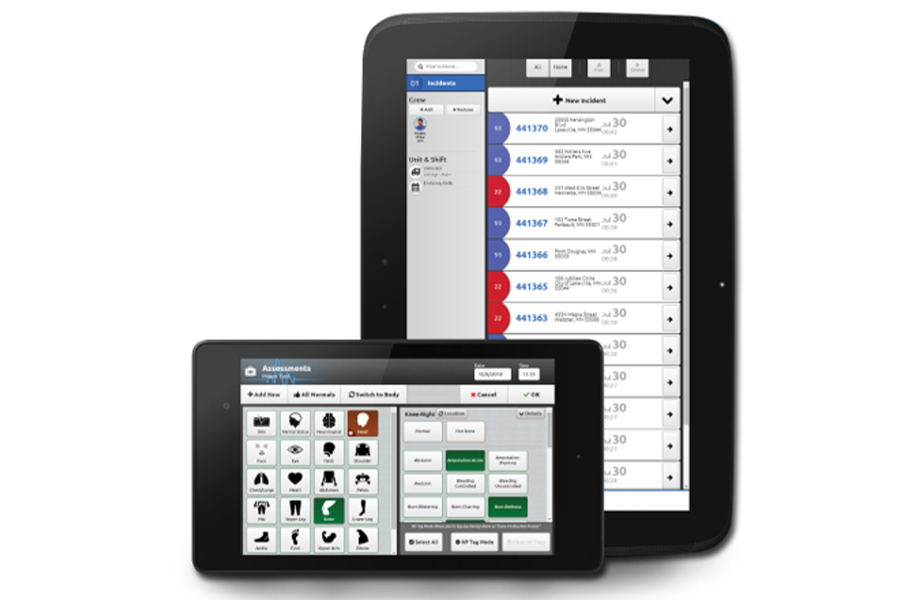
High-acuity transports require documentation that is complete, accurate, and easy to audit. Our platform supports transport-based documentation, structured data capture, and regulatory alignment, so crews can focus on patient care while maintaining consistent reporting from scene to destination.
Necessary Critical Care Documentation Requirements
Critical care teams must capture precise, high-acuity patient data while meeting compliance, accreditation, and quality improvement expectations. Clear documentation requirements help ensure consistency across complex transports and reduce gaps that can impact patient handoff, reporting, and clinical decision-making. With transport-focused documentation tools and real-time data exchange, teams can meet these requirements without slowing down care.
Transport-based documentation with offline capability and automatic datasync
Built-in validations for high-acuity, critical care workflows
Real-time data exchange with hospitals through connected systems
Support for HIPAA compliance and NEMSIS documentation requirements
Strengthen Critical Care Reporting
When documentation requirements are clearly defined, crews produce more reliable records. Structured fields, guided workflows, and automated checks support accurate reporting during trauma events, interfacility transfers, and complex transports. These standards turn every report into data that can improve operations, performance, and patient outcomes.
Capture advanced assessments and interventions with a consistent structure
Minimize reporting errors through automated validations and device integration
Share complete records with hospitals to support faster transitions
Identify trends and benchmark clinical performance
Use validated data to strengthen quality improvement efforts
Outcome Tracking for High-Acuity Patients
Quality reviews depend on documentation that captures key events, timelines, and interventions. Structured data supports performance analysis and long-term improvement.
Integration With Hospital Systems
Complete patient information, including ICU transfer details, can be shared through the Health Information Hub to ensure receiving teams have the full clinical history when care continues.
Automated Critical Care Reporting
The platform supports detailed charting of medications, procedures, assessments, and vital trends so agencies can meet documentation requirements during transport.
Stay Ahead of Reporting Challenges
See how our platform and critical care documentation examples help you stay compliant, improve accuracy, and reduce administrative burden so your teams can focus on patients.
Compliance Reporting That Supports Better Outcomes
Critical care transports involve complex care, which means every report must reflect required details. Agencies must document interventions, medication administration, clinical changes, and patient handoffs in a clear and compliant format. The platform’s validation tools and structured workflows help crews stay aligned with regulatory expectations while reducing manual edits. This produces cleaner data and more complete records that support safer care.
Meeting Documentation Standards Through Clear Requirements
Documentation requirements help agencies maintain consistency across all reports. Accreditation support tools reinforce compliance, reduce audit concerns, and help crews document care accurately across neonatal, pediatric, adult, and high-risk patient types.
Requirements for Interfacility and ICU Transfers
High-acuity transfers require specialized documentation. Structured fields support ventilator settings, infusion details, vital trends, complex assessments, and handoff notes so crews can capture the full scope of care during transport.
Requirements That Support Continuous Improvement
High-quality data enables agencies to review outcomes, identify outliers, and track performance across patient types and encounter types. With validated documentation, teams can monitor case trends, evaluate high-acuity workflows, and build long-term quality improvement strategies.
Streamline Interfacility Transfer Documentation from Start to Finish
Crews can document interventions and transfers in real time while meeting complex reporting standards. The result is complete records that improve compliance, speed care, and support stronger outcomes.