








As we look ahead to 2026, emergency medical services (EMS), fire departments, and healthcare systems stand at a crossroads. Mounting pressures like rising call volumes, evolving reimbursement models, and workforce shortages are challenging agencies to rethink how they deliver care.
To stay ahead of the curve, many departments are turning to emerging technologies like artificial intelligence (AI) and predictive analytics. Embracing this transformative new tech and staying on top of key trends gives agencies the chance to build smarter, more connected systems and drive better outcomes in 2026.
Reimagining Emergency Response with Predictive Analytics
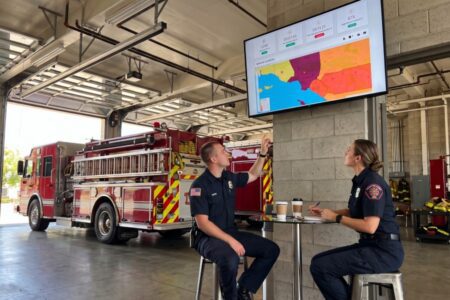
The defining challenges of 2026 are already on the horizon. Upcoming Medicare cuts will intensify financial constraints across healthcare systems as EMS departments continue to face surging demand. For fire departments, handling everything from medical emergencies to wildland fires means leaders need clear strategies to ensure their crews always have the resources to handle what comes next.
This is where AI and predictive analytics in EMS software can make a significant impact. With tools capable of digging deep into historical and real-time data, agencies can start to answer critical questions like:
- How can we better allocate resources during high-demand periods?
- What operational blind spots could affect patient or community outcomes?
- How do past data patterns signal future public health risks?
The Role of Artificial Intelligence in Frontline Care
Just a few years ago, the idea of leveraging AI in daily operations seemed like science fiction. Today, it’s quickly becoming reality in EMS reporting software and other frontline resources. In 2026, AI will play a pivotal role in enabling real-time decision-making while eliminating unnecessary burdens on field crews.
In fact, field crews can drastically reduce documentation time using automated data capture fields. Read how our recent platform updates accelerate AI in EMS documentation while keeping your system HIPAA and SOC-2 compliant.
Leveraging AI in EMS software for improved frontline care
Streamlined Workflows
- AI in EMS reporting software helps ease documentation fatigue by automating repetitive tasks, eliminating silos, and turning free-form input like voice descriptions into structured data for easy
- Guided by human oversight, AI can enhance efficiency while ensuring that EMS and fire professionals remain firmly in the driver’s seat. “AI works alongside first responders, streamlining workflows while preserving the expertise and judgment that responders bring to patient care,” says Joe Graw, Chief Growth Officer at ImageTrend.
- For hospitals, AI embedded in EMS software will strengthen the continuity of care by ensuring that complete patient data (including medication, procedures and other critical activities) moves seamlessly from the ambulance to the hospital’s electronic health records. Faster data transmission can reduce offload delays and better inform triage, saving time when it matters most.
Bringing Disparate Data Together
- Modern EMS software solutions with AI can enable deeper interoperability by seamlessly integrating data from disparate sources such as ePCR documentation, fire reporting, and hospital electronic health records (EHRs).
- For example, real-time transmission of EKG results from the field to the receiving hospital can lead to quicker diagnoses and reduced door-to-balloon time for cardiac patients.
- Unifying Fire and EMS data can offer agencies a clearer understanding of incident patterns, allowing them to improve their deployment strategies.
Proactive Public Health Monitoring
- AI-powered syndromic surveillance is transforming how EMS data can be used to protect public health. By analyzing patterns in patient data such as spikes in respiratory or flu-like symptoms, these tools provide early warnings that empower agencies to prepare and respond with more precision.
- “As we saw during COVID-19, early detection of community illness trends can protect resource availability and deliver critical lead time as systems brace for surges,” Graw explains.
- EMS leaders can access real-time insights captured in EMS reporting software to spot potential outbreaks even before these trends emerge in hospitals or clinics. This gives agencies the critical lead time needed to optimize resources and protect their communities.
Shifting to Community-Driven Care Models
Beyond improved workflows and better insights, the biggest transformation in EMS and fire over the next decade could come from a shift toward community-driven care models.
Bridging Clinical Gaps in Underserved Communities
In rural America, where hospitals and healthcare options can be scarce, many communities depend on EMS and fire departments as the backbone of care. When supported by predictive analytics in healthcare resources, community paramedicine programs can provide effective, proactive care for patients who might otherwise rely on 911 or the emergency department for non-emergent issues.
Using data to identify at-risk patients, EMS teams can:
- Visit patients in their homes to assess if their needs are being met
- Manage chronic diseases like diabetes and hypertension outside of hospital settings
- Support vulnerable populations by addressing barriers like transportation or food insecurity
Pursuing Reimbursement and Funding Opportunities with Data Analytics
In 2026, changes in reimbursement models will push agencies further toward proactive, value-based care programs. While Medicare’s ET3 (Emergency Triage, Treat, and Transport) initiative ended in 2023, new funding opportunities like the $50 billion Rural Health Transformation Grant similarly aim to support innovative care models, technology adoption, and expanded access in rural areas. These initiatives reflect a growing shift toward rewarding value-based care and improved outcomes over traditional transport-focused processes.
In this evolving landscape, reliable data and analytics are critical to proving the impact of these proactive care models. Agencies with the right tools to analyze workflows, optimize operations, track outcomes, and provide evidence of effective care will be better positioned for sustainable funding.
Risks and Opportunities on the Road Ahead
While the opportunities for AI, predictive analytics, and transformative care models are immense, agencies must stay aware of potential roadblocks as they prepare for the future.
Using AI Ethically
Transforming your operations with AI must always begin with responsible implementation. Agencies adopting AI will need to establish clear policies that address:
- Data Privacy: Using data ethically and ensuring compliance with strict security protocols.
- Human Oversight: Balancing automation with provider expertise to maintain data accuracy and patient trust.
- Bias Mitigation: Ensuring AI remains equitable and is trained on representative datasets to avoid systemic bias.
Breaking Down Siloed Systems
Fragmented systems often prevent the seamless flow of critical information, creating blind spots that disrupt care coordination and weaken patient outcomes. Inconsistent communication between ePCR platforms, fire reporting tools, and hospital EHRs highlights the need for a more connected framework, one that unites all stages of a patient’s journey.
This longitudinal event ties together every step of an emergency, from the initial 911 call and dispatch to prehospital care by first responders, hospital treatment, and even follow-up programs that reduce repeat incidents. By linking these stages, agencies gain crucial insights to:
- Strengthen Quality Improvement: Leverage complete data to refine protocols and training.
- Deliver Proactive Care: Use connected systems to identify patients for follow-up services.
This transition from activation-based workflows to value-based, outcome-focused care is the future of EMS. By connecting data from start to finish through EMS software, agencies can improve collaborative care and drive better outcomes for their communities.
Building a Culture of Data-Driven Decision-Making
As Joe Graw states, “Implementing AI and predictive analytics isn’t just a technological shift, it’s a cultural one.” He explains that agencies must invest in training providers and leaders to interpret, trust, and act on data insights. A strong focus on change management will help organizations incorporate new tools without overwhelming frontline teams who may already be stretched thin due to resource constraints.
The Role of AI and Predictive Analytics in 2026 and Beyond
Graw believes that the next few years will be defined by three consistent themes: coverage, connectivity, and insights. These are the foundations of smarter operations and improved outcomes.
Building a culture of data-driven decision-making requires giving your leadership actionable tools. Utilize our comprehensive data insights and reporting solutions to unlock real-time dashboards and automate quality monitoring.
Expanding Data Coverage and Connectivity
Agencies must position themselves to make use of EMS software tools to capture, integrate, and analyze more data across their systems, including:
- Operational data
- Patient outcomes
- Equipment performance
- Environmental factors
With these connected insights, leaders can:
- Allocate resources more efficiently
- Spot gaps in care and operational workflows
- Anticipate challenges, from seasonal flu outbreaks to surges in emergency calls during extreme weather
Building Alternative Models of Care
Programs like community paramedicine and rural health initiatives are just the beginning of a wider shift toward proactive care models. By focusing more energy on prevention and proactive monitoring, agencies can reduce strain on EMS crews while improving patient outcomes in underserved regions.
Staying Ahead of the Curve with AI and Predictive Analytics Tools
Agencies that aim to thrive in the coming years must rethink how they use data and technology to meet new demands. While every department’s needs will be different, several key tools should be on their radar:
- AI Assist allows providers to focus on care instead of manual documentation by converting natural-language inputs into structured data.
- Market Intelligence consolidates large-scale industry data to identify changing trends and risks while helping departments plan ahead.
- Syndromic Surveillance monitors EMS data for early signs of public health threats, helping communities respond proactively to emerging health threats.
A New Era of Intelligence and Innovation With AI and Predictive Analytics
AI and predictive analytics in healthcare, EMS, and fire will change operations, leading to better outcomes for communities and responders alike. The key is not simply adopting new technology, but using it thoughtfully to drive smarter decisions, deliver better care, and manage resources more effectively.
Connecting data points from the initial dispatch to post-incident auditing creates a seamless system of intelligence. Explore how the central ImageTrend EMS software unifies fire, EMS, and hospital workflows onto one single source of truth.
According to Graw, “Tomorrow won’t look like today. But while we can’t always predict the future, we can prepare for it with the right strategies and tools. The industry is entering a new era defined by intelligence, connectivity, and innovation.”
Frequently Asked Questions About Healthcare Predictive Analytics
What is predictive analytics in healthcare and emergency response?
Predictive analytics in emergency response and healthcare leverages historical documentation, machine learning, and advanced data modeling to forecast future operational demands. Instead of simply reviewing what happened in the past, these tools analyze complex data patterns to help EMS agencies, hospitals, and fire departments anticipate emergency call surges, spot emerging public health trends, and optimize resource deployment before a crisis occurs.
How does AI-driven predictive analytics integrate with standard EMS software?
Standard EMS software acts as a system of record to capture patient care data during an incident. Introducing AI and predictive modeling transforms that recorded data into actionable foresight. ImageTrend embeds these intelligent capabilities directly into our core ecosystem, matching historical incident data with real-time variables to help leadership teams make smarter positioning decisions without forcing crews to learn an entirely separate platform.
Can EMS reporting software help reduce documentation fatigue for field crews?
Yes. Modern EMS reporting software does more than track compliance metrics. It streamlines the collection process itself. By utilizing AI tools like ImageTrend AI Assist, the platform can securely convert natural-language dictation into structured data fields on an ePCR. This drastic reduction in manual charting minimizes administrative friction, decreases reporting lag times, and allows frontline clinicians to keep their primary focus on patient care.
How do predictive tools support both public health monitoring and hospital systems?
The platform serves as a collaborative data bridge across the entire care continuum. By utilizing automated syndromic surveillance, the software tracks localized symptom spikes, such as respiratory or flu-like trends, directly from active field reports. This early-warning visibility allows public health officials and hospital emergency departments to prepare for upcoming patient influxes, manage bed capacity, and adjust staffing constraints days before those same trends surface in traditional clinical settings.
Ready to learn more? Discover how AI and predictive analytics could change the game for your agency. Book a demo today.