







If documentation still feels like it takes longer than it should, even after updates, new tools, or process changes, it usually comes back to the same question: what are we missing?
By this point, most agencies have already tried to make documentation faster. They’ve added templates, adjusted workflows, and put more structure around reporting. But a lot of the time, those changes only chip away at the surface. The bigger issues keep showing up. That’s because documentation time isn’t concentrated in one place. It’s spread across everything from how data is captured in the field to what happens hours or even days later during review, billing, and reporting.
In Part 1, we focused on the time sinks crews deal with directly, like repetitive entry and manual work that slows down report completion—turning what should be a 45-minute task into a 3-hour process. In Part 2, we looked at where time keeps adding up after the call, especially in QA workflows, administrative rework, and system-level friction that is harder to see—where small gaps can quietly turn into more than 20 hours of unnecessary work each month.
In this final part, we’re bringing those pieces together. We’ll look at what is actually working for agencies that are reducing documentation time, what tends to move the needle in a meaningful way, and how things are starting to shift with tools like AI, automation, and more connected data.
What Actually Reduces Documentation Time
There isn’t one switch to flip. The agencies that make real progress tend to focus on a few practical changes that remove work from the process instead of simply asking people to move faster.
Getting Rid of Duplicate Entry
This shows up in almost every system. Crews enter patient info, then re-enter it somewhere else. Data gets typed in, then checked, then typed in again downstream. This redundant work adds up fast, slowing down an already-complex process. But when CAD data flows directly into the report, when device data pulls in automatically, and when common call types can be pre-built instead of recreated each time, that extra time (and added room for error) disappears.
Documenting During the Call (Not After)
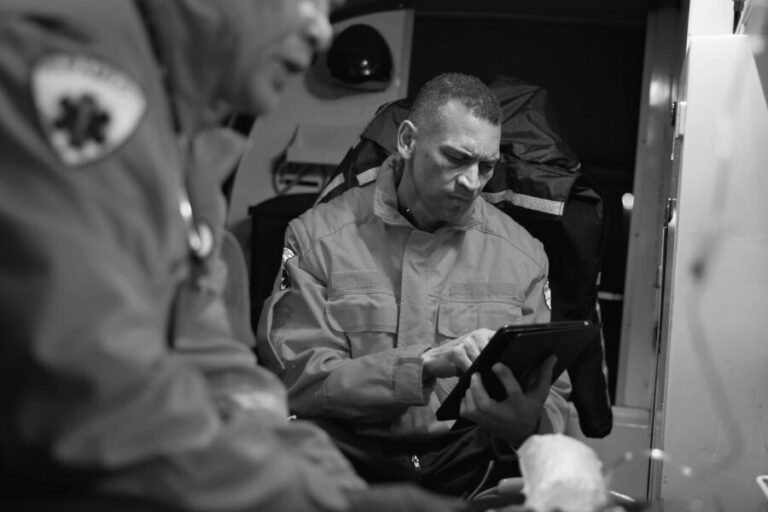
Most providers already do this when they can, but the system has to support it. Mobile workflows, automatic timestamps, and quick ways to log interventions make a difference here. When the report reflects what is actually happening in real time, there is less to reconstruct later, and fewer gaps that need to be filled in afterward. Systems that guide the process and prompt for required fields also help reduce those missing details before the report is ever submitted.
Catching Issues Before QA
A lot of time is lost fixing things that could have been prevented. If required fields are flagged right away, if timelines are checked automatically, and if inconsistencies are surfaced during documentation, there is less back and forth later. That alone can shrink QA queues and reduce how often reports get sent back to crews.
Where Time Is Still Lost After Submission
Even when crews complete reports efficiently, the work often continues in the background. Reports get reopened. Data has to be matched across systems. Teams follow up on missing or unclear information. All of those responsibilities add time that no one in the field sees directly, but still affects throughput and workload. That is where connected systems start to matter more.
For example, solutions like Carelytics for Hospitals focus on what happens after the report is done. EMS records are automatically tied to hospital encounters, data is shared between systems, and teams spend less time trying to track things down or reconcile mismatched records. Instead of reopening reports to fix gaps, the information moves where it needs to go.
On the analytics side, tools like Unified Analytics make it easier to see where delays are happening across the system. When all your data is brought under one roof, it becomes easier to spot patterns, whether that’s repeated QA issues, documentation gaps, or bottlenecks that keep showing up. That kind of visibility is what helps organizations reduce time overall, not just per report.
What’s Changing Next
The next shift is less about digitizing documentation and more about reducing how much of it needs to be done manually in the first place.
AI is starting to play a critical role here, especially around the parts of documentation that take the longest.
- Suggesting or generating narrative content based on structured data
- Helping capture information through voice or guided input
- Filling in parts of the report automatically so crews aren’t starting from scratch
There is still a need for oversight, and the report still belongs to the provider. But the amount of manual effort required to build that report is starting to change. AI-assisted documentation tools can reduce some of the more repetitive work while improving consistency when used carefully.
At the same time, automation is expanding beyond the report itself. Data is moving between systems without manual steps, QA processes are starting earlier instead of after submission, and reports are routed automatically instead of waiting on someone to send them along. These aren’t small changes on their own, but together they start to remove entire steps from the workflow.
Pulling It All Together
Across all three parts of this series, the biggest takeaway is simple. Most documentation time is not spent writing the report itself. It is spent entering the same data more than once, fixing avoidable issues, and managing the ripple effects after the report is submitted.
The agencies that are reducing documentation time are not asking crews to work faster. They are:
- Removing duplicate entry wherever possible
- Supporting real-time documentation in the field
- Preventing errors before submission
- Connecting systems so work does not have to be repeated
- Using data to understand where time is actually going
None of these simplifications are cutting corners. They just remove the work that no longer needs to be there—and that is where things are headed next. Documentation is becoming less about filling out a report and more about capturing information once and letting the system carry it the rest of the way.
Frequently Asked Questions
How can agencies reduce documentation burden without sacrificing quality?
Agencies can save time by removing duplicate entry, supporting real-time documentation in the field, and catching missing or inconsistent information before reports reach QA.
Why does better documentation workflow matter beyond the report itself?
Better workflows reduce rework, improve report consistency, and help information move more smoothly into QA, billing, analytics, and downstream care processes.
What helps crews complete documentation more efficiently?
Tools and workflows that support real-time documentation, reduce duplicate entry, flag missing information early, and automate parts of the process can help crews complete reports more efficiently and with fewer follow-up corrections.
If documentation is creating extra work for your crews and teams, speak with an expert about ways to reduce manual effort, improve report quality, and streamline workflows across the process.